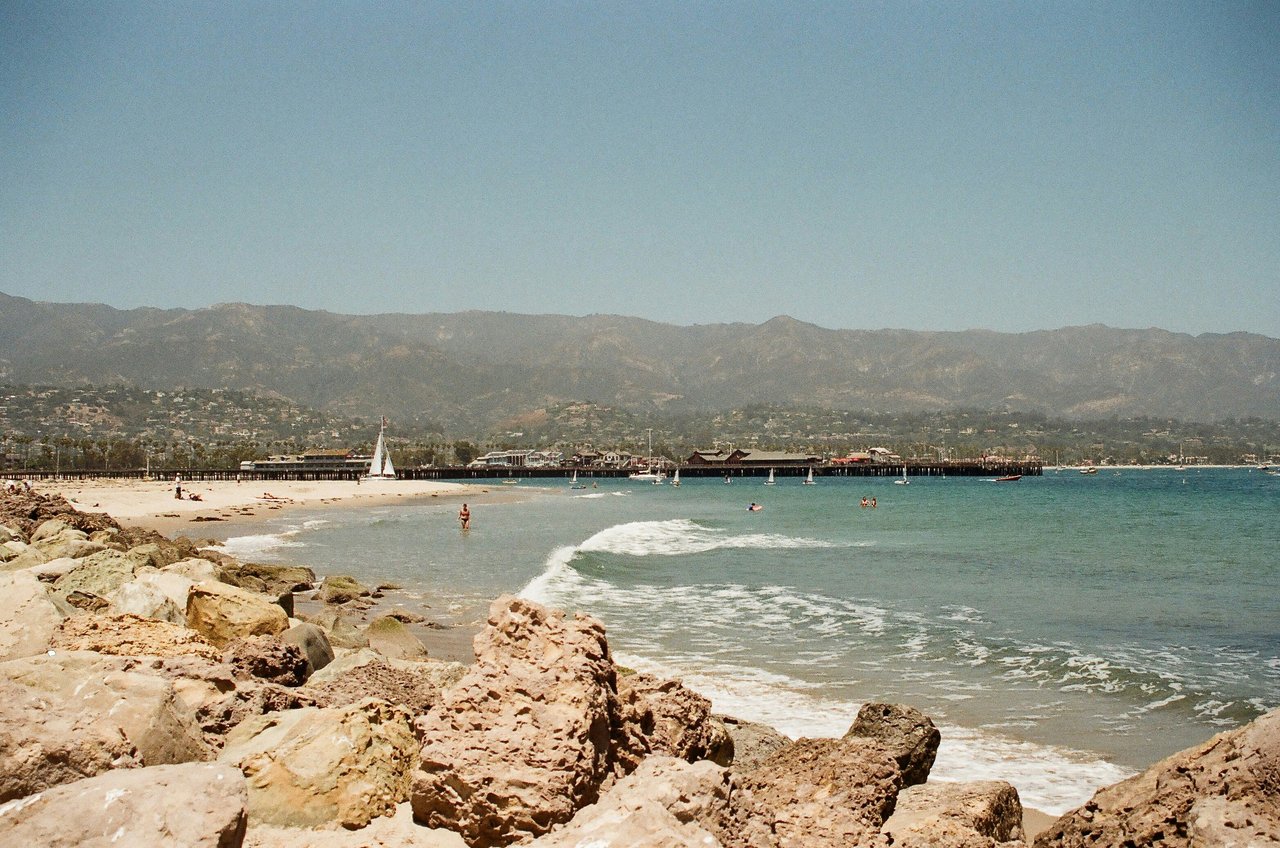
Walk the Bluffs Trail toward Tar Pits Park this month and the skyline reads differently than it did a year ago. The fifty-foot tank that used to anchor the horizon east of the state beach is simply not there anymore. In its place: open ground, some fencing, and on a recent morning, a barge with a crane parked just offshore, its claw reaching into the water while divers worked below the surface.
If you've wondered what's actually going on, you're not alone, and the short answer is more interesting than "cleanup." Chevron is dismantling the old Carpinteria Oil and Gas Processing Facility, a 55-acre property that's sat idle since 2015. What's less widely known is that the city has already put language on paper about what comes after the machinery is gone, and it isn't automatically parkland. It's residential.
The Plant That Used to Run This Stretch of Coast
The facility being torn apart sits with City Hall to its north, a farm and the Tee Time Practice Center to its east, the Carpinteria Seal Sanctuary to its south, and a residential neighborhood, including a preschool, to its west. For decades it processed oil piped in from six offshore platforms, Hope, Heidi, Hazel, Hilda, Grace, and Gail. According to the City of Carpinteria, the plant at its peak handled 4,602 barrels of oil and 3.7 million cubic feet of gas a day. The tank that just came down, known as Tank 861, once held up to 217,000 barrels on its own. Its steel is being recycled rather than scrapped.
All of that stopped after the 2015 Refugio Beach oil spill effectively shut down offshore production across Santa Barbara County. Venoco, which had operated the facility since acquiring the leases in 1988, gave up its holdings in 2017 and went bankrupt, and ownership reverted to Chevron. The plant has been sitting quiet ever since, which is part of why its sudden disassembly this year feels abrupt to anyone who's walked past it for the last decade without much changing.
Why This Is a Three-Year Project, Not a Three-Month One
Chevron filed its first decommissioning application with the city back in 2019. The City of Carpinteria approved the Development Plan and Coastal Development Permit in mid-2025, and Chevron got clearance to begin physically dismantling the site in January 2026. From there, the work has moved in a specific order: above-ground demolition first, including Tank 861, then the buried pipeline network, then soil testing to determine what remediation the ground actually needs before anything is built or planted on it.
That sequence matters if you're trying to guess how much longer this will look like a construction zone. The city's own decommissioning page describes the full timeline at roughly three years from the January 2026 start, which puts a realistic wrap closer to 2029. And Chevron isn't the only party involved. SoCalGas is separately responsible for removing its own sales gas facilities on the property, and a habitat pipeline and power cable connected to Hogan and Houchin infrastructure belong to yet another party entirely, with its own permitting process still to come. One company leaving doesn't mean the site is clear.
There's also a cultural layer to the timeline. Chevron's own project team has said there's a high likelihood of Chumash artifacts surfacing during excavation, which means tribal cultural monitors are on-site watching ground disturbance, a step that can slow work but isn't optional given what's known about the area's history.
The Seal Rookery Runs Part of the Calendar
If you've noticed the pace of visible work seems to shift with the seasons, that's not a coincidence. The Carpinteria Seal Sanctuary sits directly south of the project site, and it's one of only four harbor seal rookeries on the Southern California coast, and the only one open to the public. The city has long closed the beach within 750 feet of the rookery every winter, from December 1 through May 31, to protect pupping season. Chevron's project permit stacks its own restriction on top of that: no work within 1,000 feet of the haul-out area during that same window. So if the barge and crane activity near Tar Pits Park has picked up noticeably since early summer, that's the calendar working as designed, not a coincidence of scheduling.
What You'll Actually Run Into on the Trail
The practical stuff, if you're planning a walk or a ride out that way. Pipeline removal work limits public beach access around each active work zone for about 15 days at a time, with a monitor stationed to direct people around the closure so the rest of the beach stays open. Dump Road may see short, temporary closures tied to specific work phases, though the Bluffs Trail and Tar Pits Park themselves aren't expected to lose long-term access, just occasional short interruptions. Haul truck traffic tied to the project is restricted to weekdays between 9 a.m. and 4 p.m. on Highway 101, specifically to avoid peak traffic windows.
Separately, and worth knowing if you're headed to the Seal Sanctuary Overlook, the city has also flagged a trail detour near Casitas Pier for a power pole replacement. It's not part of the Chevron project, but it's a reminder that this particular stretch of bluff has more than one thing happening on it right now.
The Detail Buried in the New Coastal Plan
Here's the part that hasn't gotten much attention outside of city planning documents. In its March 2026 draft Coastal Land Use Plan, the city categorized this 55-acre parcel as "Planned Unit Development," a designation the plan defines as land intended primarily for residential use, with recreation, limited commercial activity, and open space allowed as secondary uses. That's a meaningfully different starting point than most people would assume for an oceanfront industrial site next to a nature preserve. It doesn't mean homes are breaking ground next year. Soil testing hasn't even started yet, and remediation standards will shape what's buildable and where. But the zoning conversation isn't waiting for the demolition to finish, it's already underway, and residential is the lead use on the page, not an afterthought.
Casitas Pier, which the city owns but which Chevron currently leases while plugging and abandoning its offshore wells, adds another open question. Once that lease ends, the city has said it will need to decide whether the maintenance cost of keeping a working pier justifies what it adds to the bluffs experience. Nothing about the pier's future is settled either.
What to Watch For
The most honest way to describe where things stand: the tank is gone, the pipe is coming out of the ground on two fronts at once, and the paperwork for what replaces all of it already leans toward housing rather than open space, though the actual shape of that future is still years away from being decided. If you walk the bluffs regularly, the barge and the fencing will likely be part of the scenery for a while longer. What changes underneath that scenery, in the zoning language and the environmental testing results, is worth paying attention to even if nothing visible happens for months at a stretch.
We keep an eye on changes like this because they're the kind that reshape a neighborhood slowly, long before any of it shows up on a listing. If you're curious how a project like this might eventually touch property values nearby, or you just want to talk through what you're seeing on your own walks along the bluffs, the David Kim Group is always glad to talk shop. And if it's ever time to see what your own Carpinteria home is worth, you can always get your free home valuation instead of guessing.